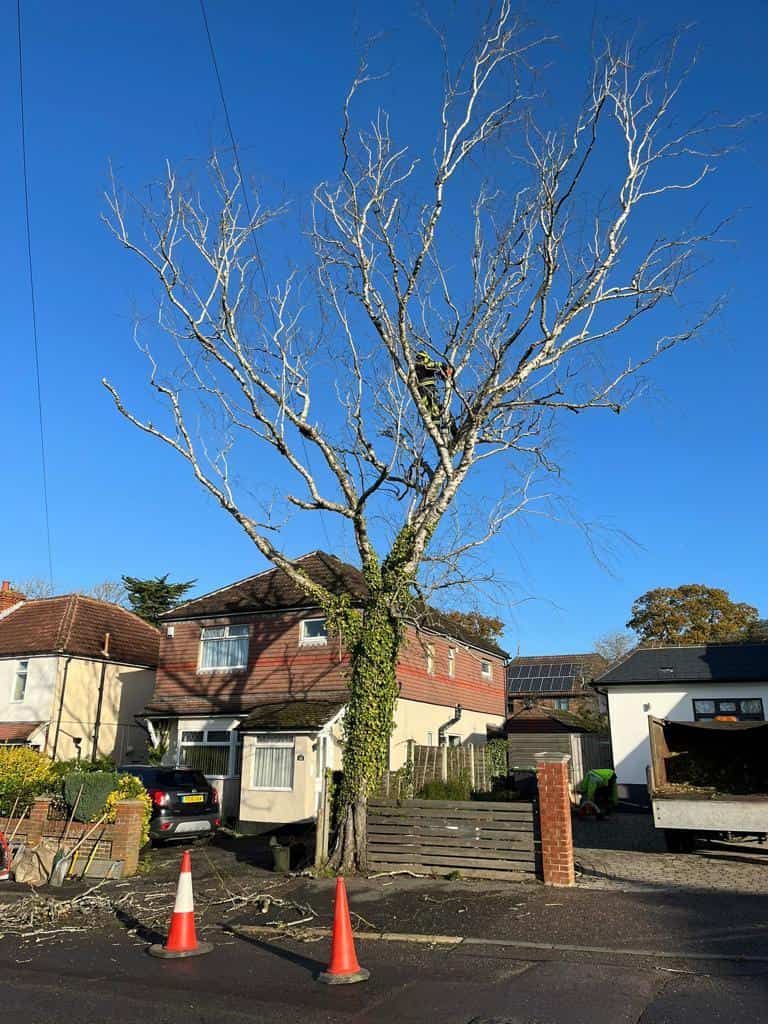
Garden maintenance often focuses on lawns, hedges, planting and paving, yet established trees can have a greater influence on the outdoor space than any other feature. Their size, condition and growth direction affect light, access, views and the development of nearby plants.
Tree surgery provides a structured way to manage these factors. Through professional inspection, pruning, crown management and the removal of unsuitable growth, trees can be maintained in a condition that complements the garden rather than gradually overwhelming it.
How Tree Surgery Supports a Well-Maintained Garden
Tree surgery should respond to the needs of the individual tree and its surroundings. The aim is not to cut branches unnecessarily, but to complete appropriate work that supports a suitable structure, manageable size and balanced relationship with the garden.
Professional Inspections Identify Developing Problems
Many tree problems begin gradually. A branch may weaken after being damaged, two limbs may start rubbing together, or dense growth may conceal deadwood within the crown.
Regular assessment can identify concerns before they become more difficult to manage. A tree surgeon can examine:
- The main stem and branch unions
- Dead, damaged or declining limbs
- Cracks, cavities and unusual movement
- Areas of excessive or uneven growth
- The condition around the root zone
- Clearance from buildings and garden features
- The tree’s overall shape and vitality
This provides a clearer basis for deciding whether pruning is needed and how much work is appropriate.
Pruning Helps Maintain a Sound Crown Structure
Selective pruning can remove branches that are dead, damaged, crossing or poorly positioned. It may also reduce competition between stems and prevent minor structural issues from becoming more pronounced as the tree matures.
Correct cuts are made at suitable positions, preserving the tree’s natural framework. Indiscriminate cutting can leave large wounds, unbalanced growth or clusters of weak new shoots.
Professional pruning therefore considers both the immediate result and the tree’s future development.
Crown Management Can Control Excessive Growth
Some trees eventually become too large for the space available. Branches may extend across lawns, paths, roofs or neighbouring garden features, while a dense canopy can dominate the entire outdoor area.
Crown reduction can decrease the tree’s height or spread while retaining a balanced outline. Crown thinning may selectively remove branches to reduce congestion, while crown lifting can provide additional clearance beneath lower limbs.
The correct method depends on the issue being addressed. Removing branches without a clear objective may alter the tree unnecessarily without improving the garden.
Tree Surgery Can Improve Light Distribution
A large or crowded canopy can cast extensive shade across lawns, borders and seating areas. Selective pruning may improve the way light passes through or around the crown without stripping the tree of healthy foliage.
The result will depend on the species, canopy density and position of the tree. Tree surgery cannot change the direction of the sun, but carefully planned work can prevent avoidable congestion and improve light distribution within the garden.
Maintaining a natural crown is important because excessive thinning can encourage rapid regrowth and leave branches more exposed.
Managing Branch Clearance Protects Garden Features
Trees continue to grow around buildings, fences, paths and other garden structures. Branches that were once well clear may eventually begin touching surfaces or restricting access.
Professional pruning can create appropriate clearance around:
- Roofs and gutters
- Garden paths
- Driveways
- Sheds and outbuildings
- Fences and gates
- Seating areas
- Other trees and shrubs
This work should preserve suitable branch structure rather than cutting every limb back to the trunk.
Balanced Trees Fit the Garden More Effectively
Trees often grow unevenly in response to sunlight, nearby buildings or competition from other vegetation. One side of the crown may become longer or heavier, affecting both appearance and weight distribution.
Selective reduction can shorten dominant limbs and improve the balance of the canopy. Severe imbalances may need to be corrected gradually to avoid removing too much live growth in one visit.
A professional approach works with the tree’s natural form rather than attempting to create artificial symmetry.
Tree Surgery Supports Surrounding Plants
Dense tree growth can compete with lawns and planting for light and growing space. Low branches may also restrict access to borders, making routine maintenance difficult.
Appropriate crown management can create a more usable relationship between the tree and the rest of the garden. This may improve access beneath the canopy and help nearby planting receive more light.
Pruning does not remove underground competition from roots, so realistic expectations are important. The complete growing environment should be considered when planning changes.
Deadwood Removal Improves Garden Usability
Dead branches can remain within a tree for an extended period before falling. Their condition and likelihood of failure vary according to their size, position and level of decay.
Removing suitable deadwood can make areas beneath the crown more practical for everyday garden use. It also gives the remaining structure a clearer, tidier appearance.
Not every dead twig requires intervention, so the work should focus on material that is relevant to the tree and its surroundings.
Young Tree Maintenance Can Prevent Future Issues
Tree surgery is not limited to mature specimens. Formative pruning during the early years can help establish a strong framework and remove poorly positioned growth while the branches are still relatively small.
Early attention may prevent crossing branches, competing leaders and unsuitable low limbs from becoming established. The tree can then develop with a structure better suited to its location.
Small, well-planned adjustments are often preferable to significant corrective work later.
Planned Maintenance Is Better Than Reactive Cutting
Waiting until a tree obstructs access or contains a seriously damaged branch can limit the available options. Planned inspections allow work to be completed according to the tree’s condition and growth pattern.
Maintenance frequency varies. Some trees require only occasional attention, while others need closer management because of their species, size or position.
A tree should not be pruned automatically each year. Work should be recommended because it has a clear purpose.
Good Tree Surgery Preserves Character
An established tree often contributes height, shade and visual interest that cannot be replaced quickly. Professional tree surgery seeks to retain these benefits while managing growth that has become unsuitable.
The finished tree should still look natural. Correct pruning follows the existing branch structure and avoids abrupt cuts that leave the crown disfigured or excessively sparse.
This balance between preservation and practical management is what makes professional tree surgery valuable within wider garden maintenance.
Conclusion
Tree surgery supports garden maintenance by identifying developing problems, managing excessive growth and maintaining suitable clearance around outdoor features. It can also improve crown structure, light distribution and the relationship between established trees and the rest of the garden.
Royston Tree Surgeons provides professional tree assessment, pruning and maintenance services in Royston, Hertfordshire. If your trees have become overgrown, unbalanced or difficult to manage, contact us to arrange an assessment and discuss the most appropriate work.
Call us on: 01763 295 186
Click here to find out more about Royston Tree Surgeons
Click here to complete our contact form and see how we can help with your tree care needs.